
Why You Should Be Using Tin Packaging
Leave a CommentClick to Expand
What is Tin Packaging?
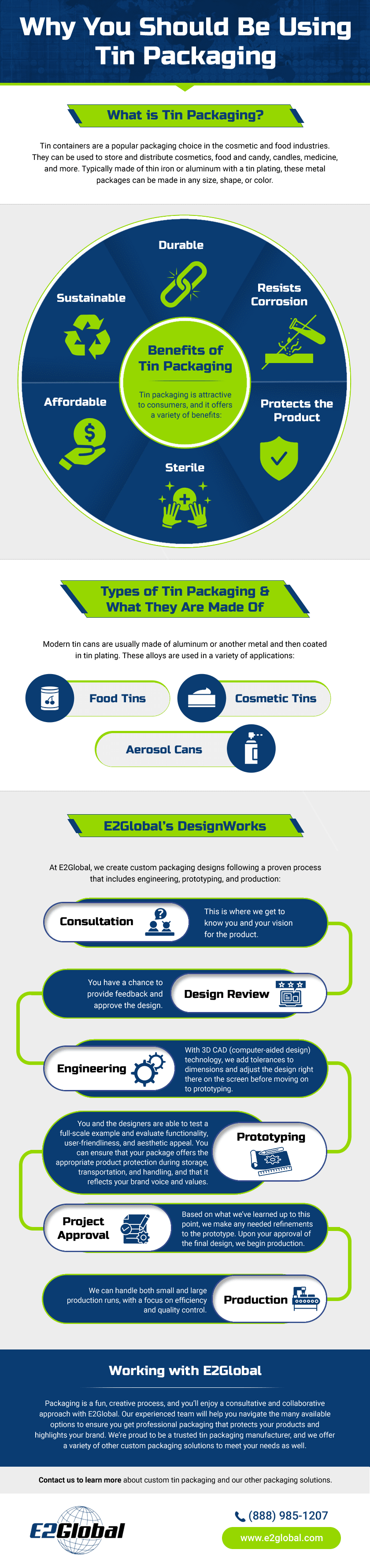
Tin containers are a popular packaging choice in the cosmetic and food industries. They can be used to store and distribute cosmetics, food and candy, candles, medicine, and more. Typically made of thin iron or aluminum with a tin plating, these metal packages can be made in any size, shape, or color.
Benefits of Tin Packaging
Tin packaging is attractive to consumers, and it offers a variety of benefits:
- Durable: Tin packaging is strong and can resist vibration and jostling as it makes its way to the shelves.
- Resists corrosion: Tin is trusted to protect food because it doesn’t oxidize easily.
- Protects the product: Airtight seals and solid containers keep out air and UV light. If light does not put the product at risk, you can consider a tin can with a clear window, so consumers can view the product inside.
- Sterile: Metals are easy to sterilize and, because they’re non-porous, they don’t have the tiny holes and crevices that create an easy breeding ground for bacteria.
- Affordable: Metal is readily available and easy to recycle, so manufacturers can obtain it at a lower cost. Tin cans are also lightweight, which reduces transportation costs.
- Sustainable: More and more consumers prefer to buy from companies that are committed to environmental responsibility. Tin is easily recycled. In addition, decorative tin containers are often reused by consumers to wrap gifts, preserve homemade goods, organize jewelry or small office supplies, or store trinkets.
Types of Tin Packaging & What They Are Made Of
Modern tin cans are usually made of aluminum or another metal and then coated in tin plating. These alloys are used in a variety of applications:
- Aerosol cans
- Beverage cans
- Food cans and tins
- Paint cans
- Cosmetic tins
Sustainability of Tin Packaging
Most metals are easily recyclable, which is a benefit to the consumer and the company. New products can be made of recycled aluminum or steel, eliminating the need to extract new metal from the planet, and allowing companies to better establish themselves as environmentally responsible. Consumers appreciate the simplicity of putting the metal packaging in the recycling bin rather than worrying about contributing more plastic to overflowing landfills. Especially when compared to plastics, metal packaging is safer for people and the planet.
E2Global’s DesignWorks
At E2Global, we create custom packaging designs following a proven process that includes engineering, prototyping, and production:
- Consultation: This is where we get to know you and your vision for the product.
- Design Review: You have a chance to provide feedback and approve the design.
- Engineering: With 3D CAD (computer-aided design) technology, we add tolerances to dimensions and adjust the design right there on the screen before moving on to prototyping.
- Prototyping: You and the designers are able to test a full-scale example and evaluate functionality, user-friendliness, and aesthetic appeal. You can ensure that your package offers the appropriate product protection during storage, transportation, and handling, and that it reflects your brand voice and values.
- Project Approval: Based on what we’ve learned up to this point, we make any needed refinements to the prototype. Upon your approval of the final design, we begin production.
- Production: We can handle both small and large production runs, with a focus on efficiency and quality control.
We offer custom manufacturing of tins as well as textiles, retail boxes, and glass and plastic bottles, jars, and tubes.
Working with E2Global
Packaging is a fun, creative process, and you’ll enjoy a consultative and collaborative approach with E2Global. Our experienced team will help you navigate the many available options to ensure you get professional packaging that protects your products and highlights your brand. We’re proud to be a trusted tin packaging manufacturer, and we offer a variety of other custom packaging solutions to meet your needs as well.
Contact us to learn more about custom tin packaging and our other packaging solutions.
Types of Plastic Molding
Leave a Comment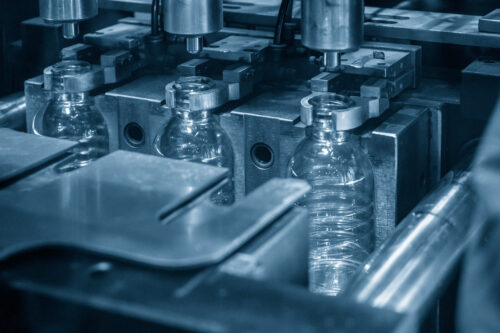
As the manufacturing world continues to evolve, plastics remain essential in making a wide variety of components, from packaging containers to automotive parts. To produce these components, manufacturers may turn to plastic molding. There are several different types of plastic molding available, each of which offers its own unique benefits and features. To determine the right plastic molding process for your needs, it’s important to consider your project’s particular requirements and specifications.
Some of the common plastic molding types include:
Injection Molding
Plastic injection molding relies on three main components: the injection molding machine, raw plastic material, and a mold. The mold is typically constructed with high-strength aluminum or steel and is made to operate in two halves, which come together inside the machine to form the custom plastic part.
During the process, molten plastic is injected into the mold, allowing it to fill all of the cavities. The plastic then cools and solidifies to become the final product. The injection molding process is complex, and multiple variables are considered, including pressures, temperatures, humidity, time, and speed. The complete process cycle for producing custom parts can vary from just a few seconds to several minutes.
Key benefits of injection molding include:
- High efficiency
- High reliability and repeatability
- Compatibility with various colors and materials
- Allows for complex geometries with tight tolerances
- Enables materials to be reused
Blow Molding
Blow molding is used to produce hollow plastic objects. It involves heating a plastic tube and filling it with air until it forms a parison, i.e., a balloon of hot plastic. Next, a mold is clamped around the parison, trapping the plastic while air continues filling it to take the shape of the part.
Manufacturers can use a range of thermoplastics to produce customized products via blow molding. The most commonly worked materials include polypropylene, high-density polyethylene, low-density polyethylene, polyvinyl chloride, and polyethylene terephthalate.
Blow molding has several advantages, such as:
- Lower costs compared to injection molding
- Lower machinery costs
- Single-piece construction does not require you to connect halves, which means it can create shapes that injection molding cannot
Compression Molding
Compression molding involves placing heated plastic inside a heated mold cavity. The mold is then closed, compressing the plastic into the desired shape. The heating process, referred to as curing, helps ensure the final component maintains its shape and integrity.
Key advantages of compression molding include:
- The process is simpler
- Lower tooling costs
- Can produce large and thicker components
- Cost-effective for short production runs
- A good option for multi-color molding and insert molding
Plastic Extrusion Molding
In the plastic extrusion molding process, plastic materials are formed into a predetermined shape. The plastic material is melted and then forced through an extrusion molding machine to form a long, tubular rod or shape. Once cooled, this shape can then be cut to the required lengths.
Many manufacturers turn to plastic extrusion molding because of the following benefits:
- Post-extrusion alterations
- Flexibility
- Low cost
LIM Molding – Silicone Molding
LIM, or silicone liquid injection molding, is a popular process used to create silicone products that need to withstand extreme environmental conditions. The advantages of this type of plastic molding include the following:
- Liquid silicone rubber provides great sealing benefits
- It leaves little waste or contamination
- Allow cost-effective production of quality parts and seals
An Experienced Partner for Your Plastic Molding Needs
With a variety of plastic molding processes available, it’s important to partner with an experienced manufacturer who can help you determine the right process for your needs. At E2Global, we are a leader in custom packaging. We offer a range of manufacturing capabilities to deliver quality plastic packaging solutions, including bottles, tubes, tins, and more. For more information about plastic molding, or to get started on your custom packaging solution, contact E2Global today.