Skip to Content

Author Archives: E2Global Inc.

  1. Is PCR (Post-Consumer Recycled Material) a Good Fit for Your Project?

    Leave a Comment

    What is Post-Consumer Recycled Material?

    Post-consumer recycled materials, also called PCR, are materials made from various recycled goods, such as aluminum, plastic items, cardboard, paper, and more. Post-consumer recycled plastics are referred to by several names, including rPET (Recycled Polyethylene Terephthalate), rHDPE (Recycled High-Density Polythene), and rPP (Recycled Polypropylene Plastic). These materials are used to produce a wide range of products, including packaging.

    The process of producing PCR plastic begins when a consumer recycles an item. After a local recycling program picks up the item, it is shipped to a facility where it is sorted into bales. The bales are then purchased and ground or melted into small pellets that are able to be molded into new products.

    The Importance of Sustainability in Product Design and Manufacturing

    In recent years, consumers, regulatory bodies, and other governing agencies have been placing an increased focus on sustainability. Companies that adopt eco-conscious packaging make a stronger appeal to customers and improve their public perception. Transitioning to post-consumer recycled content in packaging helps companies achieve their sustainability goals without sacrificing quality or costs.

    What Are the Benefits of Using PCR in Product Manufacturing?

    Using post-consumer recycled content in product manufacturing is just as beneficial to companies as it is to the environment. Some of the most significant benefits you can expect include:

    • Reduced carbon footprint. PCR significantly lowers a company’s overall carbon footprint, since it uses significantly less energy than extracting raw materials. Even after factoring in the energy costs of material collection, recycling, and remanufacturing, PCR results in a drastically lower carbon footprint than producing new plastic materials.
    • Less waste in landfills and water sources. Non-recyclable items cause huge landfills that may contaminate the soil with toxins. They also frequently end up in rivers and oceans, endangering wildlife and contributing to pollution. Adopting PCR packaging reduces your contribution to these problems.
    • Better usage of petroleum. Our planet’s supply of petroleum is limited. When companies adopt PCR packaging, they’re helping those limited resources last longer.
    • Appeal to eco-conscious customers. With consumers placing greater value on sustainability, eco-conscious packaging is frequently the deciding factor between two competing products. Adopting sustainable packaging can give companies an edge over their competition.
    • High-quality packaging. PCR packaging delivers the same level of protection and strength as non-environmentally friendly options. PCR film blocks oxygen, light, and gases from penetrating the packaging layer while looking attractive and eye-catching.

    Material Considerations for Post-Consumer Recycled Content for Your Application

    When selecting eco-conscious packaging, there are a number of PCR materials to choose from. Each type features unique characteristics that make it suitable for different industries. The most common PCR packaging materials include polyethylene, polypropylene, and polyethylene terephthalate.

    Polyethylene Terephthalate (PET)

    Commonly referred to as PET, polyethylene terephthalate is a transparent, lightweight, and durable material that’s most commonly used for water and gas barrier-related applications. For example, many types of beverages and food packages are made from PET. Virtually all carbonated soft drinks and bottled waters sold in the U.S. are made from this material.

    PET is FDA-approved for contact with food and beverages. Numerous studies and testing have demonstrated its safety for all types of products that will be consumed, including pharmaceuticals and medical applications.

    Polyethylene (PE)

    Polyethylene features excellent sealing properties and serves as a great water barrier. There are several types of PE, each with its own unique characteristics:

    • Low-density polyethylene (LDPE): A flexible material with flow properties that make it well suited for plastic film applications, like shopping bags. LDPE is highly ductile with low tensile strength. It stretches when strained, which is why it’s used to produce plastic wrap, bread and sandwich bags, garbage bags, and other similar products.
    • Linear low-density polyethylene (LLDPE): Similar to LDPE but is easily altered by adjusting the formula to achieve varying performance characteristics. It is also less energy-intensive to produce than LDPE.
    • High-density polyethylene (HDPE): A moderately stiff plastic material, HDPE is used to create more robust products, like laundry detergent containers, cutting boards, garbage bins, and other products.
    • Ultrahigh molecular weight polyethylene (UHMW): An extremely dense type of polyethylene, UHMW can be spun into threads that feature a greater tensile strength than steel. It is used in high-wear applications, like tubes, silos, liners, containers, and other types of equipment.

    Polypropylene (PP)

    As a thermoplastic material, PP can be melted, chilled, and reheated repeatedly without drastic deterioration. It is commonly used as a substitute for cellophane and paper due to its flexibility and low cost. PP is used in the automotive industry to produce door trims, bumpers, and batteries. It is also used to create beverage cups, bottles, pallets, and many other products.

    Challenges of Post-Consumer Recycled Content

    Although PCR offers a host of advantages that make it a beneficial material for packaging products, it can pose various challenges, including:

    • Limited manufacturers that are approved by the FDA
    • Lack of resources
    • Lower availability as the demand and requirements for PCR increase
    • Difficult to remove small contaminants or particles, resulting in black specks in the resin
    • Not all products can utilize PCR
    • There is a lot of fake PCR in the market

    Because of these challenges, it is especially important to partner with a manufacturer who has the proper resources, certifications, and processes to deliver quality PCR packaging that meets your needs. At E2Global, we have several years of experience working with post-consumer recycled resin and can work with you to create custom recyclable packaging based on your requirements.

    Post-Consumer Recycled Plastic From E2Global

    PCR materials are used to create durable, attractive packaging for virtually any product. They’re not only a more sustainable and environmentally conscious choice, but they also help companies improve their brand image and appeal to customers. At E2Global, we help companies develop cost-effective, reliable post-consumer recycled plastic packaging. As experts in product development, our in-house engineering team can create your ideal packaging solution. To learn more about our products and services, contact us today.
  2. Recycling Tin and Glass Packaging Products

    Leave a Comment

    Out of all the packaging materials currently used for cosmetics, food, and other products, glass bottles and tin packaging are among the most sustainable materials because of their recyclability. However, these containers must be cleaned and prepared properly before being recycled. Learn more about what makes glass and tin recyclable, as well as how to recycle these materials properly.

    Tin Recycling

    Tin is a popular packaging material for several reasons. As a substrate, tin is lightweight, highly corrosion-resistant with the right coating, and malleable under specific conditions. As a result, many premium brands use tin materials for secondary packaging applications. Tin product packaging can feature various print designs with finishes such as debossing and embossing.

    What makes tin a popular form of sustainable packaging is the fact that it is 100% recyclable, capable of being processed and reintroduced to the production cycle without compromising quality. Today, countries all over the world have a 90% or higher tin recycling rate, speaking to the inherent recyclability and economic value of tin materials.

    When using tin to coat other types of metals, it’s still possible to melt the tin and reform it several times when recycling the material. Its magnetic nature also makes it easy to remove from waste streams for reuse. Manufacturers or scrap processing companies may also recover and reuse tin from residues and scrap, reforming them into tin alloys or pure tin ingots.

    Ultimately, many brands benefit from using tin to optimize sustainability while maintaining their packaging’s high-quality appearance and feel.

    How to Recycle Tin

    Companies can recycle tin by taking the following steps:

    • Ensure no cans contain any food or liquid. This is possible by thoroughly rinsing tin containers and lids once empty.
    • Remove any lids entirely and place them inside the container.

    Glass Recycling

    Like tin, glass is completely recyclable without losing purity or quality when recycled. Glass consists of many sustainable domestic materials, including soda ash, sand, limestone, and recycled glass called cullet.

    According to data from Keep America Beautiful, recycling one ton of glass saves over a ton of raw materials and natural resources. These materials include about 410 pounds of soda ash, 1,300 pounds of sand, 160 pounds of feldspar, and 380 pounds of limestone. Since recycled glass always factors into the creation of new glass, using recycled glass can lower costs in the long term because it decreases use of new resources and energy demand in the furnace. In turn, glass manufacturers save more money on production while contributing to global sustainability efforts.

    Manufacturers consistently need high-quality recycled glass to help meet the ever-increasing demand for new glass packaging materials.

    How to Recycle Glass

    Recycling cosmetic bottles, food product containers, and other glass packaging items must be done properly. Follow these steps:

    1. Remove all lids or closures from the glass container, including any caps or corks.
    2. Rinse the container thoroughly prior to recycling, which will help minimize odors and contamination.
    3. Remove all labels on glass materials. While the recycling process often burns off the labels, removing them beforehand will help keep the glass clean while reducing emissions.
    4. The glass goes to a processor, where it is cleaned, sorted, and crushed.
    5. The processor converts the crushed glass into furnace-ready cullet that manufacturers can then purchase for use in the production of new glass products.

    Tin and Glass Packaging From E2Global

    Tin and glass are some of the most sustainable packaging materials on the market today. At E2Global, we work to provide our customers with sustainable and recyclable packaging solutions, including tin, glass, and other materials that contribute to a better environment while reducing manufacturing costs. Whether you need bottle manufacturing, tin products, or other solutions for your application, we’re here to meet your requirements.

    Contact us today to learn more about our packaging solutions and how we can help your business with top-quality sustainable products.

  3. Benefits of Choosing Tube Packaging

    Leave a Comment

    Tube packaging offers a range of benefits over more traditional packaging options like glass jars and plastic bottles. In addition to being convenient and versatile, they are affordable, eco-friendly, and provide active ingredient protection.

    Gels, creams, ointments, and serums are ideal substances for tube packaging, and with so many products on the market consumers are becoming pickier than ever before. It is becoming more and more important to have aesthetically appealing packaging without sacrificing product integrity.

    Tube packaging for cosmetics and other products is quickly becoming the packaging of choice for many consumers and brands. Personal care and cosmetic care tubes are projected to be valued at $2.8 billion by 2022. Tube packaging is completely customizable with a range of closures, sizes, and design options.

    Advantages of Tube Packaging

    Tubes are an excellent choice for a range of applications. From promoting your brand to protecting your product, tube packaging offers many benefits, including:

    Cost-Effectiveness

    Tubes are a cost-effective packing solution. Brands can easily adapt their packaging to stay in line with current marketing trends by using custom artwork. Tubes may require additional packaging to be displayed directly on shelves at retailers.

    Wide Range of Applications

    Brands across different industries can use tube packaging for countless applications and products. Personal care items, pharmaceutical products, household items, food, and health and beauty products are just a few of the applications that have already taken advantage of the benefits of tube packaging.

    Clean and Easy Dispensing

    Tube packaging comes with a variety of heads that allows for clean and easy dispensing. This feature allows the user to easily control the amount of product dispensed without creating a mess. All of the product contained in the tube can be accessed and used, unlike glass and plastic containers in which product is left inaccessible at the bottom or corners of the packaging.

    Keeps Active Ingredients from Losing Effectiveness

    Tubes have secure lids and exteriors, protecting the contents against possible contaminants from users, light exposure, or air. Preventing content contamination and degradation helps brands maintain a good reputation with their customers and allows customers to get the most use out of their purchase. Users extract the contents of the tube by squeezing it, avoiding direct contact with the product and thereby reducing contamination. Tubes also feature protective barriers like ethylene vinyl alcohol or aluminate laminate that keeps active ingredients from deteriorating the packaging.

    Convenience

    Squeeze tube packaging is convenient and easy to transport. Tube packaging is lighter and more compact than more traditional packaging options and can easily be thrown in a bag to be taken on the go. Flip-top tube packaging further enhances convenience by allowing users to simply flip the top to use the product without the worry of losing the lid.

    Design possibilities

    The design capabilities for tube packaging are virtually limitless. Manufacturers can make 3ml tubes for specialty cosmetics or 270ml tubes for a hair cream. Different heads and lids are available to suit your product, including slanted needlepoint tips, needlepoint tips, or lid choices like screw-top lids or flip lids. If the product is meant to be applied directly to a surface there are a range of applicator heads, including titanium roller balls for serum or brush tips for lip gloss. Most importantly, the tube’s external appearance can be customized to reflect the brand and product.

    Working with E2Global

    At E2Global, we specialize in custom manufactured tube packaging. Our experts will consult with you throughout the process to choose the best materials and design for your product. To learn more about the benefits of tube packaging, contact us today. We offer extensive knowledge and expertise in tube packaging and can create professional end result that meets your needs.

    Tube Configurator

  4. Glass vs Plastic Packaging – Pros, Cons, and Considerations

    Leave a Comment

    Glass and plastic are two of the most widely used packaging materials, with each offering unique advantages and drawbacks that should be considered carefully. As experts in manufacturing and product development, E2Global can help you better understand the pros and cons of these types of packaging and identify the most suitable option for your application.

    Advantages of Glass Packaging

    A ubiquitous packaging material with a long history, glass offers aesthetic appeal as well as several other unique benefits.

    Keeps Your Ingredients Fresh
    Glass packaging is non-porous with a high rate of impermeability. This allows it to safely store liquids for long periods without the risk of contamination. Since it is also non-toxic, it won’t leech any harmful substances into edible products.

    Glass also maintains carbonation and scent well, which makes it a smart choice for sodas, seltzer water, and perfumes. The inertness and impermeability of glass make it ideal for sensitive products, such as pharmaceuticals, personal care products, and alcoholic beverages. It can handle a wide range of temperatures without warping and can easily withstand the pasteurization process.

    A Premium Feeling and Aesthetic
    Glass products feel more high-end and luxurious than those stored in plastic. The look, feel, and weight of glass tends to be linked in customers’ minds with a higher brand value, which can help outperform competitors. Since glass tends to be more expensive, customers get a more premium experience that is essential for luxury products, like fruit juices, craft beers, or other products that require a sophisticated image for marketing.

    Glass is Fully Recyclable
    100% of all glass materials are recyclable without losing any integrity or quality after they are repurposed. Additionally, glass packaging is able to be washed, sterilized, and repeatedly reused by consumers themselves.

    Disadvantages of Glass Packaging

    While there are numerous advantages associated with glass packaging, certain drawbacks should also be noted:

    • Higher transportation costs than plastic: Since glass is heavier than plastic, it can cost more to transport it along supply chains.
    • Glass manufacturing involves high energy consumption: High temperatures are required for processing and manufacturing glass, resulting in a significant amount of required energy.
    • Not highly impact resistant: Glass products are more likely to break when dropped, unlike plastic, which means they need to be transported and stored carefully.
    • Rigid yet brittle: Glass breaks easily, even without significant strain. After it breaks, the large number of small, sharp shards can be extremely dangerous.

    Advantages of Plastic Packaging

    Plastic is a uniquely advantageous packaging material, making it a popular choice for a range of packaging applications. Its benefits include:

    Durability
    Plastics are made of long polymer chains, which makes them an extraordinarily difficult substance to break. In fact, certain types of plastic can be as strong as steel. This durability protects products from the wear and tear associated with shipping and production. Plastic packaging ensures products show up on retail shelves in perfect condition, even fragile items or delicate electronics.

    Lightweight
    Plastics are low in weight, which makes them easy to handle and lift throughout shipping and manufacturing processes.

    Sustainability
    Plastic materials require low energy to produce and result in fewer greenhouse emissions than other materials. While many consider plastics to be a detriment to the environment, it is actually not as harmful as producing certain other materials.

    Versatility
    Plastic can be manufactured into nearly endless shapes and configurations. It works well with a large number of processing technologies and is easily printed, colored, or decorated.

    Disadvantages of Plastic Packaging

    Some disadvantages of plastic include:

    • Large carbon footprint for production: Plastic production releases an excessive amount of carbon dioxide into the atmosphere, causing environmental pollution.
    • Not properly recyclable: The vast majority of plastic that exists has never been recycled, and not all types of plastic are recyclable.
    • Environmental concerns: In post-consumer handling, plastic packaging runs the risk of polluting waterways, harming wildlife, and filling landfills.
    • Cost of recycling: Recycling plastics involves complex processes and many plastics become unrecyclable due to contamination from food residue.

    Packaging Solutions From E2Global

    By considering the needs of your application, you can decide which of these materials is more advantageous. Whether you select glass or plastic packaging, E2Global can create a custom-designed solution that’s perfectly suited to your application. For more information about our products, or to get started on your customized packaging solution, contact us today.

  5. Why You Should Be Using Tin Packaging

    Leave a Comment

    Click to Expand

    Why You Should Be Using Tin Packaging

    What is Tin Packaging?

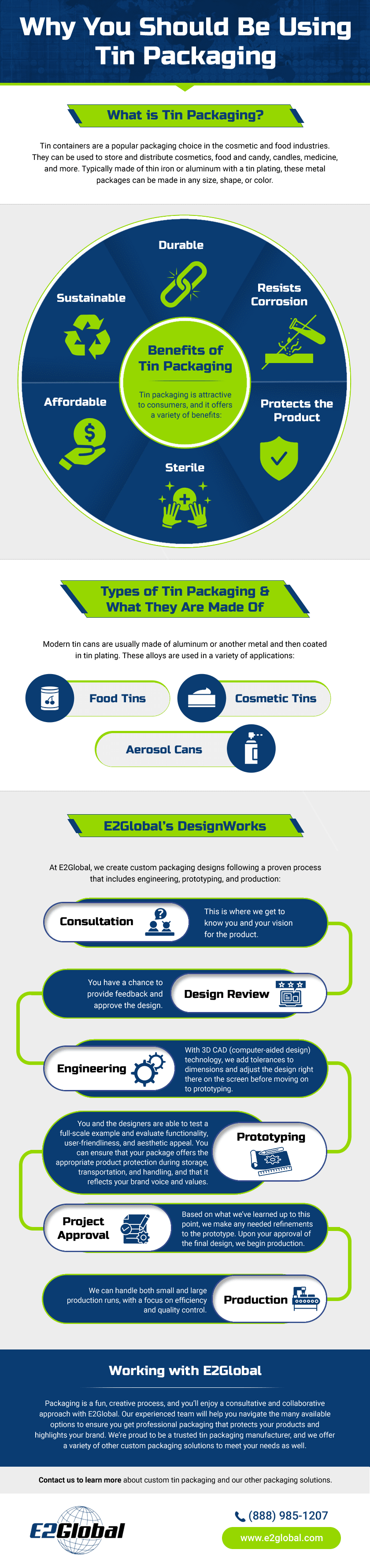
    Tin containers are a popular packaging choice in the cosmetic and food industries. They can be used to store and distribute cosmetics, food and candy, candles, medicine, and more. Typically made of thin iron or aluminum with a tin plating, these metal packages can be made in any size, shape, or color.

    Benefits of Tin Packaging

    Tin packaging is attractive to consumers, and it offers a variety of benefits:

    • Durable: Tin packaging is strong and can resist vibration and jostling as it makes its way to the shelves.
    • Resists corrosion: Tin is trusted to protect food because it doesn’t oxidize easily.
    • Protects the product: Airtight seals and solid containers keep out air and UV light. If light does not put the product at risk, you can consider a tin can with a clear window, so consumers can view the product inside.
    • Sterile: Metals are easy to sterilize and, because they’re non-porous, they don’t have the tiny holes and crevices that create an easy breeding ground for bacteria.
    • Affordable: Metal is readily available and easy to recycle, so manufacturers can obtain it at a lower cost. Tin cans are also lightweight, which reduces transportation costs.
    • Sustainable: More and more consumers prefer to buy from companies that are committed to environmental responsibility. Tin is easily recycled. In addition, decorative tin containers are often reused by consumers to wrap gifts, preserve homemade goods, organize jewelry or small office supplies, or store trinkets.

    Types of Tin Packaging & What They Are Made Of

    Modern tin cans are usually made of aluminum or another metal and then coated in tin plating. These alloys are used in a variety of applications:

    • Aerosol cans
    • Beverage cans
    • Food cans and tins
    • Paint cans
    • Cosmetic tins

    Sustainability of Tin Packaging

    Most metals are easily recyclable, which is a benefit to the consumer and the company. New products can be made of recycled aluminum or steel, eliminating the need to extract new metal from the planet, and allowing companies to better establish themselves as environmentally responsible. Consumers appreciate the simplicity of putting the metal packaging in the recycling bin rather than worrying about contributing more plastic to overflowing landfills. Especially when compared to plastics, metal packaging is safer for people and the planet.

    E2Global’s DesignWorks

    At E2Global, we create custom packaging designs following a proven process that includes engineering, prototyping, and production:

    • Consultation: This is where we get to know you and your vision for the product.
    • Design Review: You have a chance to provide feedback and approve the design.
    • Engineering: With 3D CAD (computer-aided design) technology, we add tolerances to dimensions and adjust the design right there on the screen before moving on to prototyping.
    • Prototyping: You and the designers are able to test a full-scale example and evaluate functionality, user-friendliness, and aesthetic appeal. You can ensure that your package offers the appropriate product protection during storage, transportation, and handling, and that it reflects your brand voice and values.
    • Project Approval: Based on what we’ve learned up to this point, we make any needed refinements to the prototype. Upon your approval of the final design, we begin production.
    • Production: We can handle both small and large production runs, with a focus on efficiency and quality control.

    We offer custom manufacturing of tins as well as textiles, retail boxes, and glass and plastic bottles, jars, and tubes.

    Working with E2Global

    Packaging is a fun, creative process, and you’ll enjoy a consultative and collaborative approach with E2Global. Our experienced team will help you navigate the many available options to ensure you get professional packaging that protects your products and highlights your brand. We’re proud to be a trusted tin packaging manufacturer, and we offer a variety of other custom packaging solutions to meet your needs as well.

    Contact us to learn more about custom tin packaging and our other packaging solutions.

  6. Types of Plastic Molding

    Leave a Comment

    As the manufacturing world continues to evolve, plastics remain essential in making a wide variety of components, from packaging containers to automotive parts. To produce these components, manufacturers may turn to plastic molding. There are several different types of plastic molding available, each of which offers its own unique benefits and features. To determine the right plastic molding process for your needs, it’s important to consider your project’s particular requirements and specifications.

    Some of the common plastic molding types include:

    Injection Molding

    Plastic injection molding relies on three main components: the injection molding machine, raw plastic material, and a mold. The mold is typically constructed with high-strength aluminum or steel and is made to operate in two halves, which come together inside the machine to form the custom plastic part.

    During the process, molten plastic is injected into the mold, allowing it to fill all of the cavities. The plastic then cools and solidifies to become the final product. The injection molding process is complex, and multiple variables are considered, including pressures, temperatures, humidity, time, and speed. The complete process cycle for producing custom parts can vary from just a few seconds to several minutes.

    Key benefits of injection molding include:

    • High efficiency
    • High reliability and repeatability
    • Compatibility with various colors and materials
    • Allows for complex geometries with tight tolerances
    • Enables materials to be reused

    Blow Molding

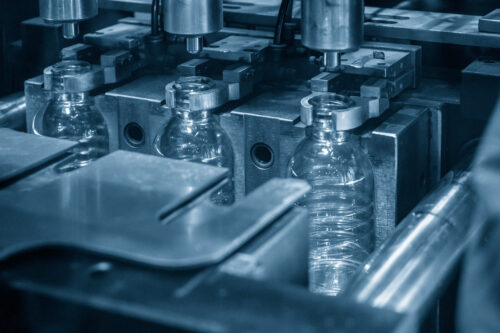
    Blow molding is used to produce hollow plastic objects. It involves heating a plastic tube and filling it with air until it forms a parison, i.e., a balloon of hot plastic. Next, a mold is clamped around the parison, trapping the plastic while air continues filling it to take the shape of the part.

    Manufacturers can use a range of thermoplastics to produce customized products via blow molding. The most commonly worked materials include polypropylene, high-density polyethylene, low-density polyethylene, polyvinyl chloride, and polyethylene terephthalate.

    Blow molding has several advantages, such as:

    • Lower costs compared to injection molding
    • Lower machinery costs
    • Single-piece construction does not require you to connect halves, which means it can create shapes that injection molding cannot

    Compression Molding

    Compression molding involves placing heated plastic inside a heated mold cavity. The mold is then closed, compressing the plastic into the desired shape. The heating process, referred to as curing, helps ensure the final component maintains its shape and integrity.

    Key advantages of compression molding include:

    • The process is simpler
    • Lower tooling costs
    • Can produce large and thicker components
    • Cost-effective for short production runs
    • A good option for multi-color molding and insert molding

    Plastic Extrusion Molding

    In the plastic extrusion molding process, plastic materials are formed into a predetermined shape. The plastic material is melted and then forced through an extrusion molding machine to form a long, tubular rod or shape. Once cooled, this shape can then be cut to the required lengths.

    Many manufacturers turn to plastic extrusion molding because of the following benefits:

    • Post-extrusion alterations
    • Flexibility
    • Low cost

    LIM Molding – Silicone Molding

    LIM, or silicone liquid injection molding, is a popular process used to create silicone products that need to withstand extreme environmental conditions. The advantages of this type of plastic molding include the following:

    • Liquid silicone rubber provides great sealing benefits
    • It leaves little waste or contamination
    • Allow cost-effective production of quality parts and seals

    An Experienced Partner for Your Plastic Molding Needs

    With a variety of plastic molding processes available, it’s important to partner with an experienced manufacturer who can help you determine the right process for your needs. At E2Global, we are a leader in custom packaging. We offer a range of manufacturing capabilities to deliver quality plastic packaging solutions, including bottles, tubes, tins, and more. For more information about plastic molding, or to get started on your custom packaging solution, contact E2Global today.

  7. Advantages of Custom Tubes

    Leave a Comment

    Custom tube packaging is ideal for a range of products in the consumer goods market. This lightweight, leak-proof, and reliable packaging solution can be used for the distribution, retail, and dispensing of various products, including medication, food, paint, cosmetics, and various other products.
    Depending on your particular needs, tube packaging can be made using metalized PET, coextruded plastic, plastic barrier laminate, or aluminum. Along with providing effective product protection, tube packaging can be customized to fit your specific size, material, and branding requirements to ensure your product stands out on the shelf.

    Advantages

    Tube packaging provides various advantages and can be custom designed to meet your exact product requirements. Specifically, custom tube packaging offers:

    • Product Safety. Custom tube packaging can meet your unique specifications while providing optimal protection from outside air, light, temperature changes, and more. This ensures higher quality and longer shelf life for your products.
    • Ease-of-Use and Accessibility. Consumers can easily dispense the amount of product they desire and reseal the package for later use without fear of contamination. Custom closures, shapes, and dimensions make the packaging convenient for consumers.
    • Portability. The lightweight, resealable, leak-free design of tube packaging improves the product’s portability. Consumers can easily stow the product in a bag, glove box, or pocket without fear of leakage during travel.
    • Efficiency. Custom tube packaging designs allow the consumer to dispense the product’s entire contents without frustration.
    • Appealing Designs. Custom tube packaging can be transparent or translucent. It can also be customized with various colors, images, text, and design choices to ensure the packaging stands out and aligns with your branding requirements.

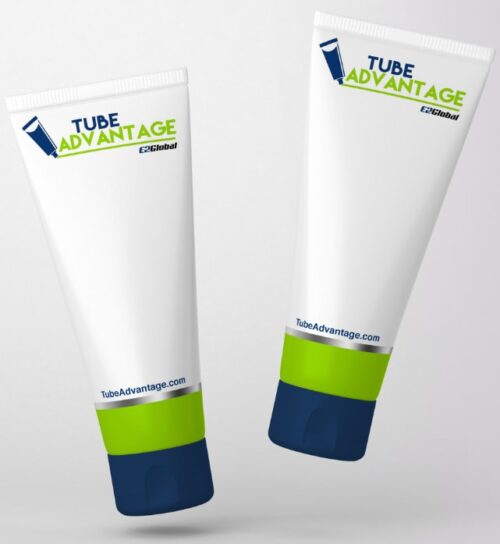
    Tube Advantage by E2Global helps clients determine the ideal custom tube packaging for their products. We rely on industry-leading expertise and advanced tools to provide extensive options and support to deliver our clients’ optimal custom solutions. Our tube configurator tool allows clients to develop and build custom tube packaging that meets their unique product and branding requirements.

    Tube Configurator Tool

    Tube Advantage by E2Global’s tube configurator tool allows clients to input details and specifications to develop custom tube packaging for their needs. Clients can browse closure designs and tube necks for inspiration to design their ideal tube packaging. We also provide resources to help clients understand our manufacturing process and build an optimal custom tube solution.

    Our tube configurator tool allows clients to choose their material, neck, cap, color, and numerous other options. E2Global then builds the custom tube based on the client’s specifications.

    Tube Configurator

    Custom Tubes From E2Global

    In a competitive retail market, products that leverage unique branding with convenient and protective packaging gain more consumer loyalty. Custom tube packaging helps you provide consumers with an appealing, portable, and easy-to-use product. Tube Advantage by E2Global can help you develop the ideal custom tube packaging for your product using our innovative tube configurator tool.

    Create your custom tube packaging with our tube configurator tool, or contact us to learn more about our custom tube packaging solutions today.

  8. Understanding the Recyclability of Plastics

    Leave a Comment
    Understanding the Recyclability of Plastics

    In 1988, the Society of the Plastics Industry (SPI) introduced a symbol system that informs the public about the recyclability of plastic. Since then, plastics manufacturers include a recycling symbol on their products – a triangle formed by three circling arrows with a number from one to seven in the center – to indicate the type of plastic and its level of recyclability. The symbols remove confusion by telling consumers what they can reuse and recycle safely. They also aim to improve recycling rates. Understanding the plastic recycling numbers is the best way to become a better recycler. In this guide to plastic recycling symbols, we will detail the types of plastics and their preferred recycling methods.

    Recycling Symbols

    Plastics are classified by the chemical process used in their synthesis and the chemical structure of the polymer’s side chains and backbone. Other criteria for categorizing plastics include material, heat resistance, moisture barrier, and clarity. These criteria inform manufacturers when indicating the recyclability symbol on their products. Below are the seven plastic recycling symbols.

    [1] PET or PETE (polyethylene terephthalate)

    This is the recycling symbol for most common plastic because it is easy to recycle, lightweight, and cost-effective. It is commonly used in beer bottles, soft drink bottles, vegetable oil containers, and peanut butter containers. Curbside recycling programs are recommended so long as the bottles are rinsed and emptied during recycling.

    [2] HDPE (high-density polyethylene)

    HDPE is a versatile plastic with multiple uses. It has a low risk of leaching and can be recycled easily into different types of byproducts. Curbside recycling programs are recommended for HDPE bottles, although some allow only bottles with necks.

    [3] PVC (polyvinyl chloride) and V (vinyl)

    PVC and V plastics are commonly used for things like siding and piping. Some of the benefits of this plastic include toughness, weathering well, and being inexpensive. PVC and V plastics release toxins when burnt. Products with this symbol are rarely recycled but can be bought by plastic lumber manufacturers. Ask your local waste management for disposal directions whenever you want to dispose of PVC and V products.

    [4] LDPE (low-density polyethylene)

    LDPE is a flexible plastic with many uses, including frozen food containers, squeezable bottles, and shopping bags. American recycling programs have not accepted this plastic for many years, but some programs have started to accept it. LDPE is most often disposed of in the garbage, however, when it is able to be recycled it is turned into trash bin liners, paneling, shipping envelopes, and more.

    [5] PP (polypropylene)

    This plastic has a high melting point, and it is commonly used in containers or bottles that hold hot liquid. It is found in straws, caps, syrup and medicine bottles, and yogurt containers. Products with PP are becoming increasingly accepted by curbside recyclers as long as they are free of food residue.

    [6] PS (polystyrene)

    PS is converted into foam or rigid products such as aspirin bottles, carry-out containers, compact disc cases, egg cartons, and disposable plates. It comprises styrene monomer and styrene oxide – two ingredients that are not human and environmentally friendly. Very few curbside recycling programs accept products with the PS symbol. Foam products can break down into small pieces, so you should squeeze them up before throwing them into the trash.

    [7] Miscellaneous

    Most plastics that don’t fit into the categories highlighted above bear a miscellaneous recycle symbol. For instance, Polycarbonate and PLA (polylactic acid) fall under this category. The plastic is found in iPods, DVDs, bullet-proof materials, three- and five-gallon water bottles, and certain food containers. These plastics are traditionally not recycled..

    Recyclable Packaging from E2Global

    E2Global is passionate about sustainability and the environment. We have several years of experience in using post-consumer recycled resin. We manufacture PET and HDPE products, recyclable packaging products commonly used in single-use bottles and household products.

    If you are looking for more information about some of our recyclable products, please contact our sales team today.

  9. Key Considerations When Choosing a Skin Care Packaging Manufacturer

    Leave a Comment


    Key Considerations

    With the wealth of beauty products on the market, it is hard to get noticed unless you have a globally recognizable brand. You must find unique ways to get the attention of your target market. An effective approach is with careful design and planning of the packaging for skin care products. Your packaging manufacturer should have the experience and knowledge of the industry to ensure your packaging is both beautiful and conforms to all regulations for consumer safety. They should also have excellent customer service. However, there are some other factors that are important. Each product may have different requirements, so consider the following aspects before deciding on the supplier:

    • Container material: Review both your primary packaging options and secondary options such as plastic, glass, metal, and others.
    • Accessories: Can your supplier accommodate applicators, dispensers, or mirrors if necessary?
    • Aesthetics: You want your packaging to be attractive with eye-catching artwork and branding.
    • Printing: What options do you have for printing, labeling, and communicating instructions?
    • Filling: Does the manufacturer have the right equipment to fill your chosen container?
    • Innovation: Rather than a plain tube, jar, or cardboard container, can your supplier provide innovative, unique designs for your packaging that set it apart?
    • Budget: Does the supplier have options to realize your vision within your budget?
    • Safety: What safety options are offered, such as seals or tamper-evident packaging?
    Skin Care Packaging Manufacturer

    Types of Skin Care Packaging and Materials

    It is essential to think about how your product could react with your choice of skin care packaging. There are many types of materials available, and you want one that will be useful for dispensing, attractive to your target demographic, and will preserve the integrity of your product. When choosing between skin care containers suppliers, make sure they can discuss the options for packaging materials and the optimal choices for your product and budget. Popular options include:

    • Polyethylene terephthalate: Also called PET, this plastic is ideal for products with high alcohol content or essential oils. PET is lightweight, comes in many colors, and can be rigid or flexible. It makes a good substitute for glass when shatter-resistance is a requirement.
    • Polypropylene plastic: Also called PP, this flexible plastic is BPA-free and 100% recyclable in the U.S. It is often the choice for squeeze tubes or twist-up dispensers.
    • Glass: An elegant and eco-friendly option for skin care bottles, vials, or rollerball applications, glass is available in many combinations of colors, thicknesses, opacities, and finishes. Use caution if the product will be used in or near a tub or shower, as it can shatter if dropped.
    • Metal: Metal is a versatile option for packaging as it can be shaped in various ways. It can comprise the whole container or a lid. Special coatings can protect the product and prevent it from reacting to the metal, particularly if it contains essential oils.
    • High-density polyethylene: Also known as HDPE, this plastic is very strong, durable, and resistant to corrosion from acids or alcohol. HDPE can be translucent or opaque and can be produced in many colors. It is often chosen for lotion bottles.

    Skin Care Packaging From E2Global

    When consumers see your product on the shelf or in an ad, what message do you want it to convey? Whether it’s luxury, eco-consciousness, value, or youthfulness, these are all considerations that should support your marketing strategy in stores and online. Personalizing your packaging ensures that it attracts your customer, stays consistent with your brand, sets you apart from your competitors, and creates brand recognition for consumers. When you need a manufacturer that can take your product packaging from concept through design to the finished product, E2Global can help. With proven expertise in consumable manufacturing, engineering, and product development, we believe in responsible manufacturing, using global, renewable, and reusable resources. Whether you want an eye-catching bottle that will highlight your product or an eco-conscious package that communicates your concern for the environment, we can make your product shine. For more information on our company and our products, contact us today.

  10. Everything You Need to Know About Custom Shampoo Bottles

    Leave a Comment


    Everything You Need to Know About Custom Shampoo Bottles


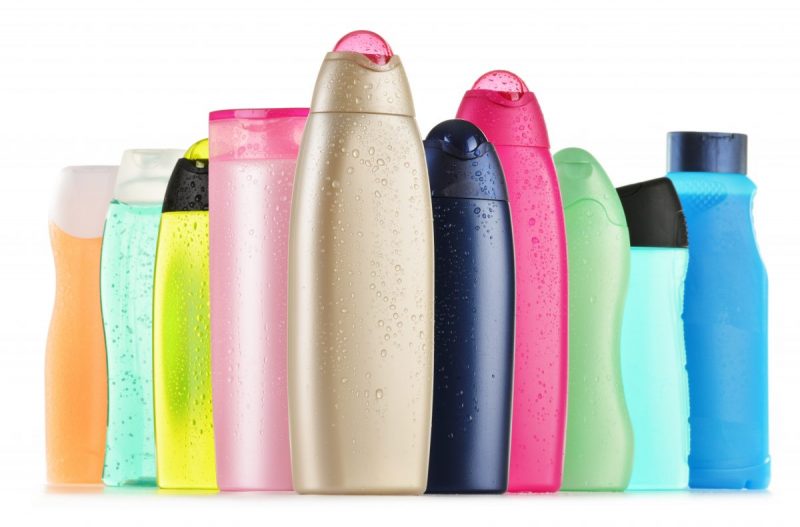
    With countless types of shampoos and conditioners on the market, having functional yet attractive packaging offers a competitive edge. At E2Global, we provide custom packaging solutions for liquids and gels to suit the packaging needs of various hair care products. Our custom shampoo bottles are manufactured using high-quality plastics and come in several sizes, shapes, colors, and cap styles to provide an aesthetically pleasing and effective packaging solution for your hair care brand.

    What Bottle Is Needed for Custom Shampoo Bottles?

    There are several factors to consider when choosing the appropriate shampoo bottle for your product.

    Bottle Material

    When determining which bottle is best for your shampoo packaging needs, one of the first factors to consider is bottle material. Common plastic materials used for shampoo bottles include:

    • PET. PET is a clear plastic material. It has good impact resistance and is easily recycled.
    • LDPE. LDPE plastic is highly flexible, squeezable, and durable.
    • HDPE. This type of plastic is cost-effective, durable, recyclable, and impact resistant.
    • MDPE. MDPE has excellent drop and shock-resistant properties, making it ideal for products commonly handled with wet hands.
    • PVC. This clear material is known for its durability and chemical resistance.

    These materials come in a variety of colors to create attractive shelf displays and enhance the buyer experience.

    Bottle Style and Shape

    Another factor to consider when selecting a shampoo bottle is style and shape. For example, clear bottles are an excellent choice for showing off colorful and attractive semi-liquid or viscous contents. Bottles with round bases offer more stability and prevent spillage from falls. At E2Global, our plastic bottles come in many different shapes, and we are here to help you make the right selection.

    What Types of Caps Are Available for Custom Shampoo Bottles?

    Another key characteristic of plastic shampoo bottles is the type of cap. Having a cap that makes your product more attractive and effectively dispenses contents is crucial to the consumer experience. Factors such as product consistency and bottle shape and style determine the best cap type for your products. At E2Global, we recommend the following types of caps:

    Pump

    Commonly used for shampoo bottles, pump dispenser caps are a smart choice for firmer, larger bottles, allowing consumers to simply leave the bottle in place and press the pump top to dispense contents. Pump tops with a head lock allow the pump top to be twisted and locked to avoid spills.

    Flip Top

    Most commonly seen on squeezable bottles, flip tops protect contents from contamination and prevent leaks by creating a tight seal when closed. These caps have a top section that flips back on a hinge so shampoo or conditioner can be squeezed out. Once the desired contents have been dispensed, the top is easily snapped shut.

    Disc Top

    Less common than flip tops or pumps, disc tops are another choice for flexible, squeezable shampoo bottles. They fit on bottles of various sizes and feature a top piece that opens when pressed to dispense shampoo or conditioner. When pressed again, the top will close and seal in the contents.

    Custom Shampoo Bottles from E2Global

    At E2Global, we know the importance of attractive, functional shampoo bottle packaging. As a custom manufacturer of various packaging solutions, we work with customers to design and produce the best packaging products for their needs. To get started on your shampoo, conditioner, or other hair care packaging solution, contact us today.


Contact us today for more information on any of our services

E2Global Inc.

Check out our new online Tube Configurator where you can customize our products to fit your needs.

Tube Configurator